Monday, December 22, 2008

A city that sat on its treasures, but didn’t see them


Every working day for the past 20 years, Suresh Kanwar, a civil engineer in Chandigarh’s Forestry Department, has been sitting on the same battered wooden chair, an object he said had “no beauty” even if it was, “for office use, very comfortable.”

Hazarding a guess as to its value, he suggested 400 rupees, or about $10, “perhaps, at a junkyard.”

A pair of chairs identical to Mr. Kanwar’s, instantly recognizable to collectors as Pierre Jeanneret teak “V-chairs,” will go on sale at the auction house Christie’s in New York this month with a reserve of $8,000 to $12,000.

A handful of antique dealers from around the world have become regular visitors to government junkyards in Chandigarh, the experimental modernist city about 150 miles north of New Delhi, conceived by the architect Le Corbusier in the 1950s. There they buy up disused stocks of furniture that was specially created by Corbusier’s colleagues to equip the new city.

The disappearance of large quantities of these distinctive, ultrafunctional tables and chairs — most of them designed by Mr. Jeanneret, Le Corbusier’s cousin, for the city’s government offices, courtrooms and colleges — has begun to alarm architects and some officials in the city.

Rajnish Wattas, principal of the Chandigarh College of Architecture, was stunned when he saw the catalog for a sale at Christie’s New York last June, titled “Chandigarh.”

“We found out that we were sitting on a pot of gold, quite literally,” he said. “But the dealers had realized much earlier that there was big money to be made.”

The process by which the furniture left the city’s offices and made its way to New York and Paris reflected a broader ambivalence among the public toward Le Corbusier’s heritage in Chandigarh and widespread official neglect of his work.

There was nothing illegal about the purchase by foreign dealers of the furniture, much of which was being thrown out or sold by the city’s administration. But very belatedly, heritage experts in Chandigarh are lamenting the loss of a vital part of the city’s original design.

“It is a tragic misunderstanding,” Mr. Wattas said. “I wish the scandal had come out earlier and then maybe we could have clung on to much more than we have now.” Last fall, he founded Chandigarh’s Heritage Furniture Committee, in an attempt to archive the remaining stocks of the Jeanneret designs. But little progress has been made.

Mr. Jeanneret, who later took over from his cousin as Chandigarh’s chief architect, was passionate about creating furniture that echoed the style and ethos of the surrounding buildings.

“There were no furniture shops, no carpet shops, so the architects designed their own,” said M. N. Sharma, an architect who worked closely with Le Corbusier. “The furniture Jeanneret designed is naturally in the same spirit as the city, in the same school of thought. It is functional, and used locally available material and craftsmen.”

Mr. Jeanneret paid extraordinary attention to detail, designing lampposts, municipal light fixtures, manhole covers, even the pedal-boats in the huge artificial lake at the heart of the city. He designed several versions of the basic chairs, with modifications for more senior bureaucrats, like leather backs and armrests instead of simple cane. Local workshops were commissioned to turn them out, and thousands were made.

Despite the striking simplicity of the chairs’ design, few of the city’s employees gave the furniture a second glance.

Gradually, as the furniture fell into disrepair, it was thrown into government storerooms and occasionally auctioned “for peanuts,” Mr. Wattas said, usually to local carpenters who broke it up and reused the increasingly expensive teak. “People wanted new and glossy stuff: synthetic leather, Scandinavian design, metallic furniture.”

India’s export laws classify antiques as objects more than 100 years old, which made it easy for collectors to take the objects out of the country.

A Paris dealer, Eric Touchaleaume, first came to Chandigarh in 1999, and started buying at government sales. Much of his collection was auctioned at Christie’s in New York last summer: a manhole cover, designed by Mr. Jeanneret, molded with the map of Chandigarh, was listed with a reserve of $20,000, alongside daybeds, stools, armchairs and bookcases.

In an e-mail message from his Paris showroom, Galerie 54, he said that such was the level of neglect for Mr. Jeanneret’s designs that disused furniture was being chopped up for firewood. “I always paid on average 100 times more than what the local dealers were offering,” he wrote, adding that he hoped that the attention the New York sale had attracted locally might encourage Chandigarh to value its heritage more highly.

Kiran Joshi, a professor of architecture at the Chandigarh College of Architecture, agreed that the dealers were perhaps not to blame. “It’s not the collectors that were the problem,” she said. “The problem is our perception of heritage. We thought it was junk; our government thought it was junk.”

The city authorities, who are applying for Unesco World Heritage status, have ordered that no more furniture be auctioned, and prisoners in the local jail have been commissioned to start restoring some of the broken pieces.

Mr. Sharma said the disappearance of the furniture was symptomatic of a broader disregard for Le Corbusier’s work.

“There is a general lack of appreciation here of Chandigarh’s architecture by the administration and the general public,” he said. “Truly, I feel very sad.”

(via New York Times)


Saturday, December 20, 2008

CIOs take lead in building management


Chief Information Officers (CIOs) are beginning to take a more commanding role in the development of “smart” building management systems, reports Network World.

As new buildings are designed to be more energy efficient - and old ones are retrofitted with new, integrated management systems - the IT department is being called in to converge its infrastructure with a building management system (BMS).

BMSs can “hang” off of IP networks, creating huge operating efficiencies. For instance, heating systems can communicate with air-conditioning systems, so windows open and close automatically to adjust to temperature. Failed light bulbs get replaced by a remote system. Vending machines on the IP network can be replenished quickly when low supplies are detected.

Large IT and networking suppliers (e.g., IBM, Cisco) are working with BMS suppliers to provide the technology for the integration. BMS providers have their own protocols that are not always IP-based, and CIOs are encouraging them to convert them, thus setting up a future of integration.

And because IT executives are accustomed to change and a short cycle of innovation, they are perfectly poised to push companies to embrace new ways of operating, said Rajesh Sinha, technical director of building services company NG Bailey Teswaine, the ICT arm of the UK’s NG Bailey.

(via Environmental Leader.)


Friday, December 19, 2008

Walls that talk


Here are some precautions and guidelines to finish the internal surfaces.

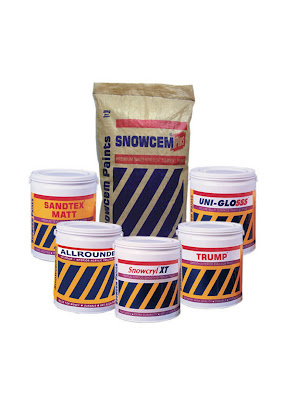
For starters, avoid painting your home during the monsoon or when humidity levels are high. Such conditions don't allow paint coats to dry up quickly. Moisture gets trapped between the surface and paint layers causing blistering. Ensure that surfaces to be painted are fully dry. Only for doing whitewashing and applying Snowcem, the surface need not be dry.

If painting the interior walls for the first time, apply simple white wash and leave alone for six months. This action will allow the plaster to dry fully prevent patches and spots later. It will be much better if this six-month period includes a monsoon. After six months, wash the walls fully to remove dirt, dust and flakes, preferably with sand paper so that all the lime wash is scrapped thoroughly. Otherwise, paint will not stick to the walls. Now, apply primers and paint of your choice and the results shall be excellent.

Pidilite has recently launched colour concentrates that produce high tint shades when mixed with white wash. So use these if you don’t want to see white walls in the initial months. Pidilite colors come in liquid form and are double effective than powder colours i.e. instead of 100 gm of powder only 50 gm of liquid concentrate is required. Take care that no ‘neel’ is added to the lime solution if using a colour concentrate. For more, read on:

White washing

Always choose fresh, unslaked, non-hydraulic lime. See that it is of class C category or Dehradun or Narnaul quality. To prepare solution, add water to lime and not lime to water. Add 5 litre water per kg of lime. The final solution should look like thin cream not water. Leave the mixture for at least 24 hours, preferably 48. Use 150 gm lime per sq metre of surface if one coat is to be done. For two coats, let it be 250 gm per sq metre. In a newly constructed house, at least three coats are recommended. However, as you are using whitewash temporarily, two coats are sufficient. Add an adhesive like DDL or SDL to the mixture at a rate of 4 kg per cu m of solution. Fevicol or gum can be the second option if DDL is not available. This will prevent whitewash from sticking to your clothes and body.

The solution: Add some ‘neel’, say 30 gm per 10 kg to the lime solution. It accentuates the whiteness and brings brightness. But the quantity of ‘neel’ must be restricted otherwise walls may give indigo reflection. For application of whitewash, use ‘moonj’ brushes. As a precautionary measure, tie gunny bags to the feet of ladders as their repeated pulling or shifting may leave marks on the floor. See that in each coat the brush passes every point four times — left to right and reverse; up to down and reverse.

Take your pick

For painting internal walls, choice is between distempers and emulsions. If you choose emulsions, there are extra premium acrylic, premium acrylic and acrylic ones to pick from. All acrylic emulsions are durable and give smooth finish to walls. You can choose glossy, semi-glossy or matt finish. Oil bound distempers too are durable, if applied the right way and economical in comparison to emulsions.

Dry distempering: If you are choosing dry distemper for internal walls, see that it is IS 427 marked. Dry distemper comes in powder form and has no resistance to water. It can’t be washed. About 1.5 litre water is added to 2.5 kg distemper. Use lukewarm water instead of cold, allow the solution to stand for at least 30 minutes, stir well and use. It will cost not more than Rs 1.25 per sqft. However, it has a short life. It has been seen that sometimes people do first coat of whitewash and then apply distemper. Don’t. Use a white chalk solution in water as primer to distemper. Dry distemper should give a coverage of about 6 sqm per kg of distemper for two coats. Mix DDL or Fevicol to dry distemper for better adhesion. Golden Champion and Goldy are good brands.

Oil bound distempering: Oil bound distemper (OBD) is washable, doesn’t come off on washing and scores over dry distemper. If you are choosing distemper, prefer OBD. It contains an emulsion of drying oil or varnish that resists water. See that it conforms to IS 428. Use thinned distemper itself as primer to OBD. Four parts of OBD are mixed with one of water to prepare its solution for application. Know that OBD shouldn’t be applied on new plaster for six months at least otherwise all its oils will be soaked by the plaster. However, if you can’t afford to wait, here is a solution. Get some ready mixed alkali resistant paint as per IS 109 and apply a coat of it. Now, you can do OBD after two days only. OBD shouldn’t come off 24 hours after its application. It will cost you around Rs 2 per sqft and give a coverage output of about 6 sqm per litre of paint for two coats. You need not mix DDL to OBD or plastic emulsion as these have a good grip.

Emulsions: If using plastic or acrylic emulsions on internal walls, add water in the first coat only. For quantity of water to be added, follow manufacturer’s guidelines. Choose plastic emulsion of a reputed brand such as Asian, Berger, ICI or Nerolac. IS 5411 mark for these paints stands withdrawn, so don’t look for it. Use manufacturer’s putty to repair the wall if required before application of plastic emulsion. Further, rub the wall with 180 number sand paper on drying up of putty and apply a coat of primer over it. On drying up of primer coat, sand paper with 320 number. Now, apply the final paint and you will receive excellent results. Tell the painter to clean all plastic emulsion drops from the floor immediately as it may become difficult to remove them later. The first coat will dry up in four-five hours. Plastic emulsion paint should give around 8 sqm coverage per litre of paint for two coats.


( Via The Tribune)

Thursday, December 18, 2008

In Hawaii, a 1,600-ton temple is built by hand


Rising on a 358-acre monastery on the Hawaiian island of Kauai is an architectural feat rare in today’s world: a 3.2-million-pound stone structure built entirely by hand.

Arguably the most elaborate Hindu temple in the United States, the $8 million white granite San Marga Iraivan Temple, designed by V. Ganapati Sthapati for the Saiva Siddhanta Church, is intended to last 1,000 years. Construction began in 2001 and is scheduled to be finished in 2012.

Hundreds of temples serve the 2.2 million Hindus living in the United States, but the Iraivan (meaning "He who is worshipped") Temple is the only one known to be built without modern equipment. Since 1990, 75 sculptors have been working in Bangalore, India, to create the building’s intricately carved stone blocks, which are then shipped to the Kauai monastery 8,000 miles away.

Once they arrive, the blocks—some weighing as much as 4,000 pounds—are physically shoved into place by nine local stonemasons who work full-time on the project. Six Saivite monks also are helping build the structure. "We have the last team capable of building this way," says Paramacharya Palaniswami, a Hindu monk who has lived at the monastery since its founding in 1970.

When completed, the building will measure 71 feet wide by 179 feet deep, and will stand 35 feet from its base to its gold-leafed capstone. The 4-foot thick foundation was formed by a single pour of crack-free, 7000 psi fly-ash concrete and required 108 cement trucks. It was the first, non-laboratory single pour performed since Roman times, according to the foundation's designer Kumar Mehta, a materials scientist at UC Berkeley.

Palaniswami says the temple is the fulfillment of his guru's vision. The monastery’s founder, Satguru Sivaya Subramuniyasami, whom the monks call “Gurudeva,” reported seeing the Hindu god Siva walking on the grounds in February 1975. "He took it as a sign,” says Palaniswami, “that Siva wanted to live here." Gurudeva, who died in 2001, outlined three parameters for the temple: that it last 1,000 years, follow traditional design according to the Saiva Agamas (popular Hindu scriptures), and be built without machinery.

Palaniswami says many Hindus in India are happy to see their traditional building heritage take root in the West. "In the West, we build fast and cheap. We don't tend to look upon our architecture as holy," he says. "This is a holy place. We're building a home for Siva."

(Via Architectural Record)


Wednesday, December 17, 2008

How to buy cement


There are two types of cement: Grey cement - used only for construction purposes, and White cement - for a variety of uses like mosaic flooring, in cement paints, and as a primer for paints, etc. Grey cement costs more than white cement because the production costs and excise duty are higher. White cement also sets faster. For grey cement, the strength after 28 days of setting is taken as the final strength. White cement achieves this strength in about three days time.

The cement has to be fine in texture. It should be smooth, dry and cool to touch. Fineness gives more strength to cement because the chemical reactions take place faster. Do not buy cement which is in rough, granular lumps. This indicates it has been exposed to moisture. Cement is now available in grades and is easier to buy . For eg: 53 grade cement implies that a cube of cement can withstand a pressure of 530 kgs per square centimetre. You can check this on a compressing machine. This is called the breaking strength of cement. Good cement hardens faster. You can therefore remove the scaffolding / formwork sooner than usual. You save on centering and labour costs, and your building is ready much faster.

(via ChennaiBest.com)

Tuesday, December 16, 2008

The basics of paint


Paint is one of the most versatile media to work with. But, before you use them in your home, it is essential to get the basics right.

What is paint?

It is a mixture of solid pigments (finely-ground particles) suspended in a liquid medium (water or mineral spirits) that dries to form a protective or decorative coating. Pigments are encapsulated by resins or binders which help attach them to the surface being painted and create the paint film.

All paints fall under two categories: water-based, commonly known as latex paint, and oil-based. The former includes all water-borne paints such as vinyl-acrylic, 100% acrylic and alkyd-modified latex. You can use latex paints both indoors or outdoors. Latex provides an excellent finish and is an easier paint to use. It can be cleaned with soap or water, dries quickly, has milder odours, is non-flammable, and easy to touch up. These environment-friendly paints allow moisture to evaporate through the film thus reducing blistering.

Inexpensive latex paints use softer vinyl-resins (binders) and more water in the formulation. More durable latex paints use 100% acrylic-resins and less water. The term enamel is normally associated with paints that have a glossy finish. These are formulated with higher concentrations of resin as they are used in areas subject to heavy wear and tear. Alkyd paints are more commonly used for areas prone to impact and high wear and tear such as floors or cabinets. These paints take a long time to dry, so they do not show brush strokes as much. But they are more expensive and odour-intensive when drying.

Interior paints can be grouped into two categories:

Distempers: These are traditional economy paints which produce a perfectly satisfactory finish with good workmanship. However, their life cycle is shorter. Dry distempers (which are available in powder form) and oil-bound/synthetic distempers are not washable. Acrylic distempers, being partly based on acrylic resins, give greater smoothness and are washable.

Emulsions: Also known as plastic paints, these are based on a fine dispersion of resin in a solvent, which on drying, creates a remarkably tough, adherent and durable coating. Special additives in emulsions give them an incomparably smooth finish in various shades that last for years. These are resistant to water, chemical, fungus and algae. They come in three categories: silk—premium acrylic emulsions, with silky smoothness and a luxurious silk-like finish; regular—they produce a smooth eggshell finish; and economy—a generation ahead of distempers, they are more durable, washable, fade-resistant and smooth.

Exterior paints

Emulsions are good to be used on the exterior as they contain high acrylic content which gives them a long lifespan. Special additives also make them exceptionally resistant to algae, fungus and atmospheric erosion. Other popular choices are cement paints and textured plasters.

Cement paints come with a weather-resistant coating that is considerably effective. The coating contains special additives that are equipped to deal with the rigours of the external environment. Textured plasters are emulsion-based and provide even stronger protection than silk emulsions, besides unique visual appeal. Their thick surface can be designer-patterned by sponging, stippling or with the help of patterned rollers. They are also washable.

Levels of gloss

The sheen, or gloss, of paint refers to the amount of light reflected by its surface. There are four basic sheens:

• Flat paints exhibit non-reflective properties, providing a matte finish that helps hide surface imperfections. It is normally used for ceilings and walls in areas less prone to wear and tear, such as dining and living rooms.

• Satin finish paints are used to create soft lustre. A satin finish provides a harder surface finish, which is more durable and more stain-resistant than a flat finish.

• Semi-gloss paints are more durable, easier to clean and more stain-resistant than satin-finish paints.

• Gloss paint has a harder, more durable and more stain-resistant finish. It is easier to clean than all other paint finishes.

Monday, December 15, 2008

Unpainted stucco needs more than a wash


Q:My stucco house has never been painted, and from years of never being cleaned it is very dirty. I have had several power-wash companies look at the house. They have tried various chemicals and they do not seem to take this dirt or mold off. None of the companies has washed the house, they have only looked at it and then refused the job.

A: Your house needs more than just a good cleaning. It needs the finish refurbished. We don't doubt that your house has never been painted. But we do question that it never had what is known in the plastering trade as a "color coat."

Stucco is a porous material made of water, lime and cement. If left unsealed, over many years it will become stained. That is the condition we think you face now.

Your question brings back memories from our youth. We've written before that our dad was a master plasterer. He could do anything with the mud, from the finest ornate ceiling work in San Francisco to coating a tract home in Newark. After working Monday through Friday on his real job, he and his buddy, Babe Mesquite, would take on "little jobs" on Saturdays to earn a few extra bucks. Many of these side jobs would be to redo the color coat on tract homes in San Leandro or San Lorenzo.

As we see it, you've got two choices to spruce up your home: a new color coat or paint.

Plastering should be left to the pros. Contact two or three licensed, bonded and insured plastering contractors for quotes.

Painting you can do yourself. The first step is to clean the surface. The quickest and easiest way is with a pressure washer. The water blasts away dirt (not stains). Pressure washers can be a little tricky to operate. For unpainted stucco adjust the spray pattern to a wide spray. Start on an out-of-the-way part of the building to get the hang of using it. Pull the trigger (there will be quite a kickback) and move the wand over the wall in a consistent side-to-side pattern. An additive designed to kill mildew is available to use with the pressure washer. Use it.

Pressure washers are available at rental centers. Make sure to ask the salesperson for a quick tutorial on operating the machine.

Once the building is washed, let it dry for a few days. Wood trim can take as long as a week to dry, depending on the weather. While the building is drying out, scrape off any residual loose paint. Feather the edges of scraped areas with 120-grit sandpaper. Carry a dust brush with you to brush any sanding dust off the newly washed building.

Next, apply a high-quality, stain-blocking latex or oil-based primer, which is a critical step when working with unpainted stucco. The primer will seal the stucco, preventing the finish coat from being absorbed unevenly and looking splotchy. Add a mildewcide to the paint to protect against the rebirth of fungus that may have been present.

We suggest you buy the paint at a store that caters to the trade. The salespeople will be able to suggest primer that is compatible with the finish you select. They also are a fount of useful information should you ask - and you should.

Allow the primer to cure according to the manufacturer's instructions before applying the finish coat. While the primer is curing, caulk any open joints or cracks in the stucco with a good-quality acrylic caulk. Smooth the caulk with a wet rag. Don't think about leaving the primer unpainted. Primer is designed to act as a base for the finish. If left unpainted for any length of time, it will fail, and all of the preparation done to this point will have to be redone.

The final and most exciting step is the finish coat - "putting on the color." Use a top-of-the-line, 100 percent acrylic house paint in the sheen of your choice - flat, satin, semi-gloss or gloss. The shinier the finish, the more any defects will show. We've always been partial to a satin sheen for its washability and because it hides defects well. Because you are dealing with a previously unpainted surface, the stucco may require two coats of the finish.

Over the years, we've used brushes, rollers and airless sprayers to apply primers and finishes. Our best results have come from using the airless sprayer to apply paint to large surfaces, then going back over the area with a roller or a brush while the paint is still wet. We think that method gives us the best of all worlds. The sprayer gets the material on quickly, and the brush or roller gives a uniform coat that gets into all the nooks and crannies.

( via SF Gate)