Friday, August 31, 2007

Paints you can make at home

Painting is always a fun activity for toddlers. Early on, they learn about texture by using their hands, and later on they can master fine motor control when you introduce a brush. If you find you don't always have paint on hand, here are a few recipes, many made with items you probably already have on hand.

Finger Paint (uncooked)

What you need:
1/2 cup liquid starch
1/2 cup soap powder
5/8 cup water

What to do:
Beat together until the consistency of whipped potatoes

Finger Paint (cooked)

What you need:
2 cups flour
4 cups cold water
food coloring or dry tempera

What to do:
Mix flour and water and cook over low heat until thick
Cool
Add a pinch of salt
Add dry tempera or food coloring, if desired
Store in covered jar in refrigerator

Soap Paint

What you need:
Warm water
3 cups detergent flakes
food coloring

What to do:
Add water, a little at a time, to detergent flakes
Mix to consistency of heavy cream
Color with small amount of food coloring

Puffy Paint

What you need:
Flour
Salt
Water
Food coloring

What to do:
Mix equal amounts of flour, salt and water.
Add food coloring for color.
Pour mixture into squeeze bottles and paint.
Mixture will harden in a puffy shape.

Salt Paint

What you need:
1/8 C. liquid starch
1/8 C. water
Food coloring

What to do:
Mix together and apply to paper with a brush.
Keep stirring mixture. Paint will crystallize as it dries.

Pudding Paint

What you need:
Instant Vanilla Pudding
Food Coloring

What to do:
Mix pudding according to directions.
Add food coloring for desired color.


Thursday, August 30, 2007

China's Wall becoming less and less Great


Sand storms in northwest China are reducing sections of Great Wall to mounds of dirt and may cause them to disappear in about 20 years, state media said on Wednesday ( via Yahoo)

The Great Wall, which was chosen last month as top of the new seven wonders of the world, snakes its way across more than 6,400 km (3,980 miles) and receives an estimated 10 million visitors a year.

More than 60 km of the wall in Minqin county in Gansu province, built in the Han Dynasty which lasted from 206 BC to 220 AD, had been "rapidly disappearing", Xinhua said, citing the head of the local museum, Zhou Shengrui.

"This section of Great Wall was made of mud rather than brick and stone, so is more prone to erosion," it quoted Zhou as saying, adding the wall had become brittle and the mud sanded down and blown away over time.

"Similar erosion happened to the Great Wall in other places, but the situation is much worse here," he was quoted as saying.

Extensive farming since the 1950s had sapped underground water in Minqin and destroyed the local ecology, which made the county a major source of sand storms in northwest China, the agency said.

Wednesday, August 29, 2007

What is an interior designer?

Interior design is a multi-faceted profession in which creative and technical solutions are applied within a structure to achieve a built interior environment. These solutions are functional, enhance the quality of life and culture of the occupants, and are aesthetically attractive. Designs are created in response to and coordinated with the building shell, and acknowledge the physical location and social context of the project.

Designs must adhere to code and regulatory requirements, and encourage the principles of environmental sustainability. The interior design process follows a systematic and coordinated methodology, including research, analysis and integration of knowledge into the creative process, whereby the needs and resources of the client are satisfied to produce an interior space that fulfills the project goals.

Interior design includes a scope of services performed by a professional design practitioner, qualified by means of education, experience, and examination, to protect and enhance the life, health, safety and welfare of the public.

These services may include any or all of the following tasks:
• Research and analysis of the client’s goals and requirements; and development of documents, drawings and diagrams that outline those needs;
• Formulation of preliminary space plans and two and three dimensional design concept studies and sketches that integrate the client’s program needs and are based on knowledge of the principles of interior design and theories of human behavior;
• Confirmation that preliminary space plans and design concepts are safe, functional, aesthetically appropriate, and meet all public health, safety and welfare requirements, including code, accessibility, environmental, and sustainability guidelines;
• Selection of colors, materials and finishes to appropriately convey the design concept, and to meet sociopsychological, functional, maintenance, life-cycle performance, environmental, and safety requirements;
• Selection and specification of furniture, fixtures, equipment and millwork, including layout drawings and detailed product description; and provision of contract documentation to facilitate pricing, procurement and installation of furniture;
• Provision of project management services, including preparation of project budgets and schedules;
• Preparation of construction documents, consisting of plans, elevations, details and specifications, to illustrate non-structural and/or non-seismic partition layouts; power and communications locations; reflected ceiling plans and lighting designs; materials and finishes; and furniture layouts;
• Preparation of construction documents to adhere to regional building and fire codes, municipal codes, and any other jurisdictional statutes, regulations and guidelines applicable to the interior space;
• Coordination and collaboration with other allied design professionals who may be retained to provide consulting services, including but not limited to architects; structural, mechanical and electrical engineers, and various specialty consultants;
• Confirmation that construction documents for non-structural and/or non-seismic construction are signed and sealed by the responsible interior designer, as applicable to jurisdictional requirements for filing with code enforcement officials;
• Administration of contract documents, bids and negotiations as the client’s agent;
• Observation and reporting on the implementation of projects while in progress and upon completion, as a representative of and on behalf of the client; and conducting post-occupancy evaluation reports.

Tuesday, August 28, 2007

How to tackle peeling


Loss of paint due to poor adhesion. Where there is a primer and top coat, or multiple coats of paint, peeling may involve some or all coats.

POSSIBLE CAUSES:

  • Seepage of moisture through uncaulked joints, worn caulk or leaks in roof or walls.
  • Excess moisture escaping through the exterior walls (more likely if paint is oil-based).
  • Inadequate surface preparation.
  • Use of lower quality paint.
  • Applying an oil-based paint over a wet surface.
  • Earlier blistering of paint.

SOLUTION:

  • Try to identify and eliminate souce of moisture. Prepare surface by removing all loose paint with scraper or stiff wire brush, sand rough edges, and apply appropriate primer. Repaint with a top quality acrylic latex exterior paint for best adhesion and water resistance.

Monday, August 27, 2007

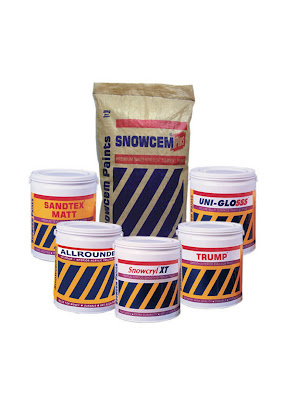
At Snowcem Paints, quality counts

For the last 50 years, we have delivered the highest value to our customers with twin benefits of “protection with beauty” at a reasonable cost.

We have the maximum reach and experience in exterior paints segment under the toughest conditions of temperature & humidity. Three strategically located plants for faster delivery & cost optimization. The paint quality is strictly monitored and controlled at our in-house laboratories.

  1. R&D: Our R&D continuously upgrades and innovates to bring the best solutions for our customers. The dedicated team of Paint Technologists is responsible for continuously improving existing product performance and introducing new concepts.
  2. At your service: A strong force of 150 tech-experts specialized in customizing painting solutions to meet the stringent demands of the infrastructure & realty industry. Regularly organize technical painter meets & workshops. Also first to provide insurance for painters, as part of its ethical responsibility. A unique info-journal called Snowcem News, highlighting the advances in the field of painting & show casing prestigious projects across India.
  3. Infrastructure:
  • Multi location manufacturing
  • Factory packed products for best quality
  • 3 strategically located Plants for faster response time
  • Well equipped R&D center
  • Constant search for new technologies
  1. Nurturing Environment:

Snowcem believes in nurturing the Environment through:

  • Power generation from Windmill farms
  • Complete treatment of factory effluents
  • Promote use of non polluting water based paints
  • Health & Safety of plant, employees and environment
  1. International Recognition
  • UNESCO approved and recognized Snowcem Paints for heritage buildings
  • Used extensively in Europe for over more than 50 years

Saturday, August 25, 2007

How to paint windows

Of all the woodwork in the home, windows suffer the most stress. Constant exposure to temperature changes and condensation means that windows often need to be painted more frequently than doors, moldings and trim.

Unfortunately, the process involved in painting windows can be confusing. To simplify things, we offer some window painting guidelines that can save you time, money and aggravation.


Start by gathering the right tools for window painting:

  • a 1 1/2" or 2" quality brush (use synthetic bristles if you are painting with
  • one of the popular latex interior paints);
  • a cutting-in brush for precision work;
  • a paint shield or masking tape;
  • a screwdriver;
  • enough top quality paint to complete the job.


Remove locks, curtain hooks and other hardware from the windows. This will speed your work and produce a better-looking paint job.

Double-hung windows

For double-hung windows, follow this six-step procedure:


1. Raise the bottom sash and lower the top sash most of the way, so that there is a 6" overlap. Paint the bottom horizontal section of the top sash, then the accessible vertical members. Use care to keep paint from getting in between sash and frame which can "glue" the window in place.

2. Nearly close the upper and lower sashes, then finish painting the rest of the top sash.

3. Paint the entire bottom sash.

4. After allowing the sashes to dry, paint the window frame.

5. Close the windows and paint the exposed parts of the runners. If your windows have sash cords, avoid getting paint on them.

6. Paint the window sill and apron.

Casement windows

If your home has any casement windows (windows that open out or in, rather than up or down), use a different technique:

1. Open the windows and paint the top, side and bottom edges.

2. Paint the crossbars and frame casings.

3. Complete the job by painting the sill and apron.

Regardless of the type of windows you are painting, if you have a steady hand, you can keep paint on the frame and off the glass by using the cutting-in brush. But be sure to overlap the paint onto the glass slightly to help seal off moisture and drafts.

There are two other techniques for keeping paint off of the window panes: holding up a paint shield as you work or applying masking tape to the glass.

When using tape, press it firmly to the glass to keep excess paint from creeping beneath it. (If stray specks of paint get onto the glass, simply remove them with a razor blade.) Remove the tape before the paint dries to a hard film.

Friday, August 24, 2007

Three rules for interior painting

Sequence for painting a room is from top to bottom: Ceiling first, then walls, then windows, doors and finally baseboards.

Great interior painting is as easy as one-two-three

There are many reasons why interior painting is the nation's most popular home improvement project.

Painting can quickly and dramatically transform the appearance of a room, an apartment or an entire home; it's personally rewarding; it's inexpensive; and it's fun .

Moreover, interior painting is easy. Even novices can often get professional painting results by following just three simple rules

Rule number one: Prepare the surface properly

  • Good paint performance depends on good paint adhesion, and paint adheres best to surfaces that are clean and sound. Before picking up a brush or roller, it's important to make sure the surface is "inviting" to the paint.

  • Accumulated dirt, dust and grime should be removed from walls, ceilings and trim with a detergent-water solution. After washing, the surfaces should be thoroughly rinsed with water and allowed to dry completely.
  • Next, a putty knife should be used to fill cracks, holes and other surface imperfections with either spackling compound or a quality acrylic caulk. If spackling is used, after it is dry it should be sanded smooth and flush with the surface; caulk should be smoothed and feathered as it is applied.
  • Finally, if walls or ceilings have water stains or other serious discol-oration, then before painting, it may be necessary to coat them with a latex or oil-based stain-blocking primer to prevent the stains from bleeding through the new paint.


Rule number two: Use only top quality paint


  • Compared with ordinary interior paints, top quality finishes are much easier to work with and offer superior long-term performance.

  • In terms of application benefits, top quality paints won't spatter or tend to show brush marks. And since they hide better than ordinary paints, a single coat is often sufficient to give a great looking paint job and save on time, labor and cost.

  • Top quality interior paints also are tougher and more durable than ordinary interior paints, according to experts at the Paint Quality Institute. They resist fading, yellowing and staining. And even if they do get spotted or stained, discoloration can often be washed off without damaging the finish.


Rule number three: Invest in quality tools


  • To get the most from top quality interior paint, it should be applied with high quality brushes and rollers. Not only will they apply the paint more evenly, but they will also make the job more effortless

  • The best brushes tend to be well balanced, hold a lot of paint and apply the paint evenly. Look for brushes with tightly packed bristles and test them for springiness. And be sure they don't fan too much.

  • When applying the more popular latex or water-based interior paints, it's important to use brushes and rollers with synthetic bristles and covers. They'll maintain the proper stiffness and keep their shape regardless of the amount of water they're exposed to.
    Most oil-based or alkyd paints can be applied with brushes and rollers made either of synthetic or natural materials.
    Remember. interior painting can be as simple as one-two-three. But there are no shortcuts. Good surface preparation, top quality paint and high quality tools are all essential to get the best