How many light bulbs can 1 billion people change? About 400 million wasteful incandescent bulbs, in India’s case.
Today, India has put in place a market mechanism that will phase out incandescent bulbs, making way for a cleaner energy future. The Bachat Lamp Yojana programme will replace 400 million incandescent bulbs with CFLs by 2012, which would save about 55 million tonnes of CO2 each year.
It's truly amazing how big the savings can be from strong action on energy efficiency. With this decision, India will be cutting the same amount of emissions that would come from four coal-fired power plants. If the whole world followed India's lead, eliminating wasted electricity from lighting, the cumulative effect would be equivalent to shutting down around 220 coal-fired power plants.
In this case, India has used a mechanism set up under the Kyoto protocol to bring down the cost of compact fluorescent bulbs (CFLs) for ordinary people. The more efficient bulbs were previously 80 - 100 rupees and will now be only 15 rupees, the same price as an incandescent bulb.
The funding comes via the cleaner development mechanism (CDM), effectively a way for developed nations to fund emissions reductions in developing nations. This programme sets an example of how nations can work together now to cut emissions, but a much bigger deal is needed urgently to stop runaway climate change.
Industrialised countries must agree to fund around USD 140 billion a year to help economies in the developing world cut emissions, protect tropical forests and adapt to the effects of climate change. Of course, countries too must implement tough domestic targets to ensure that global greenhouse gas emissions reach a peak by 2015, and start declining rapidly thereafter, reaching zero by 2050.
In India, lighting makes up 20 per cent of all residential electricity consumption, so this is a good first step. We at Snowcem Paints congratulate the Indian government, and hope it is going to carry out more actions in its plan, along with targets and timelines.
Energy efficiency is a really smart way to reduce demand and reduce CO2 emissions quickly, but it is only one half of the solution to climate change. The other is to quit coal and to replace it with non-polluting renewable energy sources like wind and solar - a real energy revolution.
India's rapid pace of development means its CO2 emissions are going up. It also faces peak power shortages even now, so a clean energy revolution will deliver big solutions to these big challenges.
Since 2006, the faculty of Sir JJ College of Architecture and Snowcem Paints have collaborated to improve the civic life in the city of Mumbai by instituting the Snowcem Faculty Medal .This competition is for participation by all the students, from the first to the final year. Snowcem
Paints are associated with the faculty medal for the last three years and have kindly sponsored the medals and prizes. The theme given each year are intended to address pressing urban, social and civic issues faced by the city of Mumbai. Each entry is intended to generate alternatives that can transform the city through design excellence. The best entries of the competition are put on display for the city at large.
The theme for the third Snowcem Faculty Medal Competition (2008) was:
Pedestrian Ways in the City
The aim of the competition is to search for solutions that return the city to its primary users, people on the street, by creating of inclusive and barrier-free urban environment that can be rich and fulfilling.
Pedestrian Ways should make opposite parts of the city accessible, overcome barriers of fast moving traffic by pedestrian walkways and peoples places and create urban environment that's rich with the creations by its own inhabitants.
The meeting of Jury for the Snowcem Faculty Medal 2008 took place in the college premises on 22nd December 2008. The Jury members for the Snowcem Faculty Medal 2008 were Jal Aria, Architect and Academician, Nayana Kathpalia, Convener Cityspace and S. Shankar Menon, former bureaucrat and pedestrian activist. From over 180 design sited all over Mumbai, 30 were short-listed.
After intense deliberations, the Jury awarded the Snowcem Faculty Medal for the Year 2008 to Darshan Maru. The Jury appreciated his design for giving primacy to pedestrians, being simple, doable and cost-effective. The design solution was sensitive to its surroundings and did not disrupt the existing visual landscape. The Jury also appreciated Maru's use of public art in creating a humane environment for the pedestrians.
The Second Prize was awarded to Shraddha Sawant, whose design was appreciated for creating a new public space while finding a solution to the existing traffic problem. The judicious use of levels in the design made both vehicles and pedestrians negotiate easily. The public-private partnership was obvious in the design.
Two Commendations were given by the Jury. The first to Sachin Porkute whose design the jury felt was an interesting response to a complex junction. They appreciated that the design did not disturb the surrounding heritage structures and their current views. The use of travellators for senior citizens was innovative.
The second Commendation was given to Pooja Ugrani. The Jury appreciated the design's primacy for the pedestrian, as it proposed for vehicles (as large as buses) to go underground. The use of the ground plane for cultural activities was lauded.
The Snowcem Faculty medal is to be awarded on 17th February 2008 at 2.00 pm in the C. M. Master Hall of the Sir JJ College of Architecture. Col A.K Pahel, Additional Chief Engineer, of theMumbai Metropolitan Region Development Authority has kindly consented to grace the occasion and give away the prizes.
Go placidly amid the noise and haste, and remember what peace there may be in silence.
As far as possible, without surrender, be on good terms with all persons. Speak your truth quietly and clearly; and listen to others, even to the dull and the ignorant, they too have their story. Avoid loud and aggressive persons, they are vexations to the spirit.
If you compare yourself with others, you may become vain and bitter; for always there will be greater and lesser persons than yourself. Enjoy your achievements as well as your plans. Keep interested in your own career, however humble; it is a real possession in the changing fortunes of time.
Exercise caution in your business affairs, for the world is full of trickery. But let this not blind you to what virtue there is; many persons strive for high ideals, and everywhere life is full of heroism. Be yourself. Especially, do not feign affection. Neither be cynical about love, for in the face of all aridity and disenchantment it is perennial as the grass.
Take kindly to the counsel of the years, gracefully surrendering the things of youth. Nurture strength of spirit to shield you in sudden misfortune. But do not distress yourself with imaginings. Many fears are born of fatigue and loneliness.
Beyond a wholesome discipline, be gentle with yourself. You are a child of the universe, no less than the trees and the stars; you have a right to be here. And whether or not it is clear to you, no doubt the universe is unfolding as it should.
Therefore be at peace with God, whatever you conceive Him to be, and whatever your labors and aspirations, in the noisy confusion of life, keep peace in your soul.
With all its sham, drudgery and broken dreams, it is still a beautiful world.
After an exhaustive search spanning thousands of nominees from five continents, the International Collective Council of Excellence has announced this year’s World’s Greatest Business Mind to universal acclaim and fanfare.
The decision was unanimous despite the fact the world-class shortlist comprised such well-known names as Steve Jobs, Warren Buffett, Bruce Wayne, George Soros, and that kid who invented Facebook. Here's the award video.
Here are some precautions and guidelines to finish the internal surfaces.
For starters, avoid painting your home during the monsoon or when humidity levels are high. Such conditions don't allow paint coats to dry up quickly. Moisture gets trapped between the surface and paint layers causing blistering. Ensure that surfaces to be painted are fully dry. Only for doing whitewashing and applying Snowcem, the surface need not be dry.
If painting the interior walls for the first time, apply simple white wash and leave alone for six months. This action will allow the plaster to dry fully prevent patches and spots later. It will be much better if this six-month period includes a monsoon. After six months, wash the walls fully to remove dirt, dust and flakes, preferably with sand paper so that all the lime wash is scrapped thoroughly. Otherwise, paint will not stick to the walls. Now, apply primers and paint of your choice and the results shall be excellent.
Pidilite has recently launched colour concentrates that produce high tint shades when mixed with white wash. So use these if you don’t want to see white walls in the initial months. Pidilite colors come in liquid form and are double effective than powder colours i.e. instead of 100 gm of powder only 50 gm of liquid concentrate is required. Take care that no ‘neel’ is added to the lime solution if using a colour concentrate. For more, read on:
White washing
Always choose fresh, unslaked, non-hydraulic lime. See that it is of class C category or Dehradun or Narnaul quality. To prepare solution, add water to lime and not lime to water. Add 5 litre water per kg of lime. The final solution should look like thin cream not water. Leave the mixture for at least 24 hours, preferably 48. Use 150 gm lime per sq metre of surface if one coat is to be done. For two coats, let it be 250 gm per sq metre. In a newly constructed house, at least three coats are recommended. However, as you are using whitewash temporarily, two coats are sufficient. Add an adhesive like DDL or SDL to the mixture at a rate of 4 kg per cu m of solution. Fevicol or gum can be the second option if DDL is not available. This will prevent whitewash from sticking to your clothes and body.
The solution: Add some ‘neel’, say 30 gm per 10 kg to the lime solution. It accentuates the whiteness and brings brightness. But the quantity of ‘neel’ must be restricted otherwise walls may give indigo reflection. For application of whitewash, use ‘moonj’ brushes. As a precautionary measure, tie gunny bags to the feet of ladders as their repeated pulling or shifting may leave marks on the floor. See that in each coat the brush passes every point four times — left to right and reverse; up to down and reverse.
Take your pick
For painting internal walls, choice is between distempers and emulsions. If you choose emulsions, there are extra premium acrylic, premium acrylic and acrylic ones to pick from. All acrylic emulsions are durable and give smooth finish to walls. You can choose glossy, semi-glossy or matt finish. Oil bound distempers too are durable, if applied the right way and economical in comparison to emulsions.
Dry distempering: If you are choosing dry distemper for internal walls, see that it is IS 427 marked. Dry distemper comes in powder form and has no resistance to water. It can’t be washed. About 1.5 litre water is added to 2.5 kg distemper. Use lukewarm water instead of cold, allow the solution to stand for at least 30 minutes, stir well and use. It will cost not more than Rs 1.25 per sqft. However, it has a short life. It has been seen that sometimes people do first coat of whitewash and then apply distemper. Don’t. Use a white chalk solution in water as primer to distemper. Dry distemper should give a coverage of about 6 sqm per kg of distemper for two coats. Mix DDL or Fevicol to dry distemper for better adhesion. Golden Champion and Goldy are good brands.
Oil bound distempering: Oil bound distemper (OBD) is washable, doesn’t come off on washing and scores over dry distemper. If you are choosing distemper, prefer OBD. It contains an emulsion of drying oil or varnish that resists water. See that it conforms to IS 428. Use thinned distemper itself as primer to OBD. Four parts of OBD are mixed with one of water to prepare its solution for application. Know that OBD shouldn’t be applied on new plaster for six months at least otherwise all its oils will be soaked by the plaster. However, if you can’t afford to wait, here is a solution. Get some ready mixed alkali resistant paint as per IS 109 and apply a coat of it. Now, you can do OBD after two days only. OBD shouldn’t come off 24 hours after its application. It will cost you around Rs 2 per sqft and give a coverage output of about 6 sqm per litre of paint for two coats. You need not mix DDL to OBD or plastic emulsion as these have a good grip.
Emulsions: If using plastic or acrylic emulsions on internal walls, add water in the first coat only. For quantity of water to be added, follow manufacturer’s guidelines. Choose plastic emulsion of a reputed brand such as Asian, Berger, ICI or Nerolac. IS 5411 mark for these paints stands withdrawn, so don’t look for it. Use manufacturer’s putty to repair the wall if required before application of plastic emulsion. Further, rub the wall with 180 number sand paper on drying up of putty and apply a coat of primer over it. On drying up of primer coat, sand paper with 320 number. Now, apply the final paint and you will receive excellent results. Tell the painter to clean all plastic emulsion drops from the floor immediately as it may become difficult to remove them later. The first coat will dry up in four-five hours. Plastic emulsion paint should give around 8 sqm coverage per litre of paint for two coats.
Many choices of painting material are available and the trend is to look for best-looking and durable paintwork, irrespective of the cost involved. However, simply buying the best and most expensive paints doesn't bring the desired results. Certain workmanship points too need to be kept in mind. Renaissance is the idea at the back of the mind when a house owner decides to repaint his house. The old paint needs to be removed and surfaces prepared. And, painting a newly-built house demands equal attention, as the first paintwork lays the foundation for all future works. So, a few guidelines given here and in next six episodes must be followed.
First check
Before doing internal and external finishing work, ensure that all doors and windows have been installed in position, all electrical conduits, their boxes and fixtures embedded in walls and walls finished smooth. There should be no plaster finishing marks along the conduits. All plumbing and sanitary pipeline chases must have been filled and finished. Take some more precautions. Tape all the edges of switchboards and window frames. Put jute bags or waste clothes on the floor to save it from paint droppings. When painting external walls, remove your vehicles from the site and cover the plants and shrubs, if you can't move them. Cover all door and window fittings with polythene and tape to avoid messy blotches.
Colour Magic
Decide the colours you are going to in your home very carefully. Pastel shades of pink, green and blue bring a soothing effect to a room while yellow and red are very attractive and make the room look warm. In India, pastel colors are preferred as these look cool and soothing. Decide colour scheme as per your personal liking and comfort. Take a look at the effect of each colour and take your pick.
Generally, a colour palette displaying hundreds of colours is available with paint dealers. Check it to choose shades of your choice. The present trend is to use a dark colour on one wall of a room to highlight it and project it as the feature wall while lighter colour is applied on the other walls.
If the walls and floor are light-coloured, a room will look bigger. So, choose light colours if you want your room to look bigger. If the ceiling is low, again choose light colours as these will enhance visibility in the room. If the ceiling is too high, apply a dark colour to it and see the room height decrease instantly. Shining and reflecting wall surfaces will also make the room look bigger. If you run a strip or band of colour all round a room, it will give a compact look.
Light and shade
While deciding the colour scheme, you must see how they look in artificial light. Generally, dark colours look brighter in artificial light while light ones appear suppressed. Shade cards don't give you the exact idea. Choose by visiting a friend's house or showrooms where you could see the colours on a wall. Before buying your total requirement, buy samplers (easily available now in most leading brands). Paint a small area of wall, allow it to dry and then decide. You just cannot go wrong this way.
Sequence it Right
Paint a room in the following sequence: Always paint the ceiling first. That way, any drops trickling on to the walls will not be a problem. Next, do the walls and finally, the doors and windows. The most important part of painting, white washing and colouring your house is to find a really good painter. Take extra pain here -- a good painter can put an end to more than half your worries instantly.
Brand Matters
Always buy good quality paint from a reputed company. Never go for cheap and low quality paint even if the painter suggests so. Look for reputed names. Even if you choose a lower grade -- i.e. first, second or third quality -- let it be of a reputed brand. This will help in getting a well-finished surface. Buy the paint in one lot. Different manufacturing lots may have slight difference in appearance. So, to avoid a variation in shade and to have a uniform look, buying full quantity of paint in one lot is important.
Options Aplenty
A large variety of wall and woodwork paints is available and it is difficult for the house builder to decide which paint to choose for each surface. For internal surfaces, the choice is between whitewash, colourwash, dry distemper, oil bound (oil emulsion) distempers, plastic (acrylic) emulsion paints and premium emulsion paints. For exterior surfaces, choice is between cement paints such as Snowcem Paints red paints, semi acrylic emulsion paints, 100% acrylic emulsion paints, heritage finish, spectrum finish and cladding. For woodwork, choice is between synthetic enamel paint, French polish, polyurethane polish and melamine polish.
Calculation Time
Work out the required quantity of each type of paint to be used by measuring the areas of the walls and the ceiling. Deduct the area of doors, windows, ventilators, openings, cupboards etc from the wall area. Work out the area of ceilings. If you can't work this out, as a thumb rule, multiply your floor area by 5 and this is the approximate total area to be painted. Different type of paints have different covering capacities. Wall emulsions such as acrylic, plastic and lustre cover about 80 to 150 sq ft. area a litre when applied in two coats. Acrylic and oil bound distempers cover 60 to 100 sqft per kg per two coats. Wood enamels cover 80 to 90 sqft per litre per two coats while transparent finishes cover just 40 sq ft per litre per two coats. Exterior acrylic or textured can cover 50 to 75 sq ft area per litre per two coats and cement paints cover about 30 sqft area per litre per two coats. Coverage capacity differs from company to company.
Cost Factor
For least cost of finishing work, the combination of paints is cement paint for external walls, dry or oil bound distemper for internal walls, French polish or synthetic enamel of second quality for woodwork and third quality synthetic emulsion for metals. For best quality work and no cost consideration, use a combination of dirt proof and weather proof 100 per cent acrylic exterior emulsion paint or heritage finish or spectrum finish for external walls, premium emulsion paint for internal walls, melamine or polyurethane finish for woodwork and first quality synthetic enamel for metallic surfaces. For medium cost and quality, use textured exterior emulsion paint or semi acrylic emulsion paint or cladding for external walls, low range plastic emulsion for internal walls, low range melamine or polyurethane polish for woodwork and second quality synthetic enamel for metallic surfaces.
Exteriors of a house are constantly exposed to severely acting elements of weather. In India, the weather effect is quite variable -- sometimes, it is harsh sunlight and at others, severe and unkind winter. Rain, fog, high and low temperatures also tend to fade the exteriors. As the appearance of cracks and infestation of algae ruin the first impression of a house, owners seek an exterior paint finish that is able to resist all these weathering effects.
You have many choices for the exterior surfaces and the elevation. You can have exposed brickwork or plastered surfaces or a combination of both or cladding of walls with various types of stones or textured finish. While choosing exterior finish, our main purpose is to make the elevation look beautiful and appealing, to have a durable finish that survives for a few years, at least, to choose a finish that resists dust and weathering effects and the one that breathes -- allows moisture of walls to escape without hurting their beauty.
All these aspects can be well fulfilled through right choice of finish and proper workmanship. Here are a few guidelines for durable painting of exterior surfaces, but first choose what you want.
Exposed Brick
Many homeowners prefer exposed brickwork on the elevation. Since ages, man has been seeing exposed brickwork in buildings, monuments and forts and an inbuilt desire to have part elevation with it remains. However, the decision to have exposed brick in the elevation should be made early and one should keep sorting out good bricks while doing the brickwork of foundations and internal walls of the house and use these bricks in exposed brickwork for a uniform look. Otherwise, use mechanised bricks. When the exposed brickwork of external walls is in progress, do raking of joints to a depth of 10 mm at least while it is still green. Before applying paint, make sure to do pointing.
Pointing: Prefer deep pointing to flush. Flush pointing doesn’t look good on brickwork and mars its very character. Always begin deep pointing work from top downwards. See that all extra mortar is cleaned off and not smeared over the bricks. Do pointing work with 1:2 cement sand mortar. Take care that the vertical joints are truly at right angles to horizontal lines and any minor errors in brickwork are hidden by the pointing work. A very important point to see is that the vertical lines should not end away from horizontal lines nor should these extend into them creating ridges there. Cure the pointing work well for at least seven days.
Cement Paint
If you choose cement paints, commonly known by the trade name Snowcem, on external surfaces, choose a reputed brand like Super Snowcem by Killick Nixon or the one by Asian Paints. Always choose from a fresh lot and see that the bags are IS 5410 marked. Open a bag, feel the Snowcem in your hand and see that it is free of lumps. In general, cement paint bags or sealed drums showing date of manufacture as within one year of purchase are considered fit but try to get a lot as fresh as possible. Reason for this is that cement paints are just a mixture of cement and pigments and cement attracts moisture from air and loses strength with time. So, don’t go by the expiry date on the bags or drums but get a lot as fresh as possible.
Preparation: While preparing cement paint for exterior walls, take care that dry powder is added to water and not water to powder. First take 50 per cent quantity of water to make a paste and then add balance 50 per cent to make a workable mix. Always mix thoroughly. At one time, mix only a quantity that will get used up within an hour of mixing with water. Otherwise, the paint mixture will start setting, will lose strength and brush marks will appear on surfaces.
The coats method: Clean exterior walls of dirt, dust, loose material and efflorescence with wire brush and then by washing, before applying the first coat of Snowcem. Thoroughly wet the surface before applying paint. Apply second coat after 24 hours of first. However, you need not wet the surface before applying second coat. After second coat, keep the surface fully wet for next two days by spraying water on the paint and not by throwing water with a pipe or container. I recommend a fog spray. It is a tried method and yields best results.
Texture Paint
In case you don’t want to paint the exterior plastered walls with Snowcem, consider Birla White Textura. Textura is also a cement-based paint but gives a textured wall finish — as the name suggests — instead of a plain surface. It comes in a variety of textures and designs. Unlike acrylic paint, no primer coat is required and is an economical textured finish. Above all, Textura needs no curing, has extra adhesive strength and resists water and weather. It is mixed with water and applied with trowel or roller or spray. Roller or spray finish textura is termed as RF while trowel finish textura is called TF.
The method: Prefer to use RF textura on interior surfaces and TF textura on the exterior. Textura contains Birla white cement, some minerals, polymers, quartz sand and additives. You can apply it even on damp walls. Textura TF and RF are sold in 25 kg bags. A bag costs around Rs 700. Generally, a bag cover gives 100 sq ft. area. Though the textura shade card may show many colours, it is applied only in white colour and then paints like Apex are applied over it. Its overall cost, including labour, should be about Rs 16 to 18 a sq ft. While applying, take care that at one time, only that much quantity is prepared that can be used up in 1.5-2 hours. To prepare its solution, add about 45-50 per cent water to it. If you want to use the spray method, some more water may be added to make it sprayable with a gun.
Acrylic Emulsion
Cement paints used for painting external surfaces of walls are not fully resistant to algae and fungus. Other paints available are semi acrylic and 100 per cent acrylic exterior emulsion paints. These paints give extremely good performance and also provide protection against fungus and algae. However, these are many times costlier than Cement paints. Therefore, you must make your cost calculations and buy paints your budget allows. All inclusive cost of semi-acrylic paints is around Rs 6- 8 per sq ft. This includes labour component. Good semi-acrylic paint costs around Rs 100-125 a litre. One litre should cover about 50 sq ft. area in two coats. No water curing of this paint is required.
Cost factor: For really good results, choose a 100 per cent acrylic exterior emulsion paint. It costs around Rs 180-220 a litre and covers around 50 sq ft area in two coats. All-inclusive cost of its application shall be about Rs 10-12 per sq ft. Today, labour component is very high and tends to equal material cost if you engage skilled painters. Do no water curing for this type of paint as well.
More tips on paintwork shall follow. Till then, happy painting!
As the days grow shorter and the nights grow cooler, you may suddenly realize that you only have a few weeks left to finish your exterior painting projects. However, beware of painting outdoors when the weather turns nippy. Painting when the weather is too cold is a mistake that will leave you with unsightly consequences.
Most manufacturers instruct homeowners to apply solvent-based paint when ambient and surface temperatures are above 45 degrees F and latex paints when ambient and surface temperatures are at least 50 degrees.
Solvent-based paints thicken in lower temperatures, causing stiffer brushing, heavier application and slower drying. This can mean paint runs, sags and wrinkling on vertical surfaces, plus an overall reduced rate of coverage per gallon.
Below 50 degrees, latex paints dry more slowly, especially when high humidity is present. This hinders coalescence, which can lead to poor film-forming, lack of surface adhesion and premature paint failure.
Some manufacturers offer latex paints that can be applied at temperatures as low as 36 degrees F. These specially formulated products contain coalescing agents that aid in film-forming during lower temperatures. Check with your local independent paint retailer for information about these products.
Another thing to consider about seasonal painting is the amount of daylight. When the days are short, there is less daylight available to aid in drying. If you're using a solvent-based paint, which dries by oxidation, daylight is especially critical. So, be sure to paint early in the day so that light is present to add in the drying process.
Also consider the effect of heavy dew. Humidity affects the drying time of all paints, but especially latexes. Most manufacturers recommend that at least two hours be allowed for paint to dry before sunset if cool temperatures and heavy dew are expected that evening.
Finally, keep in mind that cooler temperatures may extend the time before the paint reaches serviceability or hardness. An enameled door requires more time before it can be closed without sticking to the jamb. A clear coating applied to a deck will need more time before you can walk on it. Primers require more time before top-coating. Knowing all of this may aid you as you go about your painting chores in the spring or in the fall.
When in doubt, remember to call your local paint and decorating retailer for advice and assistance. Or contact Snowcem Paints.
Taking a serious note of the health hazards posed by lethal paints laden with lead, particularly to children, the global community has resolved to eliminate the noxious element from paints worldwide.
A resolution in this regard was adopted by the Intergovernmental Forum on Chemical Safety (IFCS), a body formed by United Nations Environment Program (UNEP).
The IFCS, which held its VI session at Dakar in Senegal, deliberated on issues in the area of sound management of chemicals.
"The resolution could prove to be an important milestone in the annals of chemical safety and management.
"It could result in setting up international standard for lead and eventual elimination of the element from paints which is deadly for children’s health, particularly the nervous system," said Ravi Agarwal, director of Toxic Link, an NGO which had moved the proposal.
"Noteworthy is the fact that the developed world had long ago replaced lead from paints with easily available lead-free alternatives such as titanium dioxide. Only a global effort can phase out the toxic element from paints in developing countries like India," he said.
The move would also pave way for the country to frame specific regulations, which at present are not adequate, Agarwal added.
Last year, Toxics Link had conducted a study on levels of lead found in various brands of paints available in India for household use and claimed to have found high concentrations of lead exceeding the globally accepted standards in all popular brands of paints, except for one.
Adopt a ‘green’ way of life Art made of recycled materials Auctions to benefit an environmental project Award presentations for environmental competitions Awareness campaigns
B
Bicycle parades/races Broadcast of public service announcements (TV and Radio) Buy a fuel-efficient car
C
Calculate your carbon footprint Carpools Celebrity support Clean-up campaigns Competitions (banner, drawing, essay, painting, poster, poetry) Conferences on the environment
D
Debates on environment issues Dedicate your blog to World Environment Day on 5 June Distribute leaflets, brochures and posters Donate to an environmental cause
E
Environmental education programmes in schools Excursions to nature sites Exhibitions (drawings, posters, photos, paintings)
F
Fairs Festivals Film festivals on the environment
G
Give a gift membership of an environmental organisation Guidelines to community-based environmental activities
H
Hoist banners at major road intersections Help local environmental groups organise WED events
I
Inform all your friends about WED Involve various partners (NGOs, ministries, youth groups, celebrities, private sector) Issue First Day Covers (stamps)
J
Join an environmental group Join UNEP’s carbon neutral network Join the Billion Tree Campaign
K
Keep your neighbourhood clean Kick-start an environmental campaign Kick the CO2 habit! Know your rights
L
Launch of government environment policies, books, reports Lobby local authorities to adopt sound environmental policies
M
March for the environment Media coverage and activities
N
Never litter
O
Offset your emissions Organic farming/cooking Organize a WED themed event in your neighbourhood
P
Parades Performances (plays, songs, poetry) Plant a tree Plastic bags: avoid them! Promotional material (t-shirts, stickers, bookmarks) Puppet shows for children with an environmental message
Q
Quizzes related to the theme for schools, youth groups, company staff, etc…
R
Rainwater harvesting Rallies Ratify international environmental conventions Reduce, re-use, recycle Rehabilitate natural habitats Replace your light-bulbs with energy saving ones
S
Save paper Seminars Sort rubbish Speeches Sponsorship from private sector Sports activities Switch off stand-by TV and computer
T
Take action T-shirts for WED
U
Use sustainable modes of transportation (walking, jogging, cycling, skating, carpool)
V
Vehicle emission monitoring Vermicomposting Visits to botanical gardens and national parks Volunteer for organizations such as Clean Up the World
W
Waste less! Workshops Write plays, poems, songs Write letters to civic leaders, members of parliament, government and newspapers
X
Xchange ideas Xpect environmental responsibility
Y
Youth-led activities
Z
Zero emissions
This World Environment Day, we at Snowcem Paints rededicate ourselves to Mother Nature.
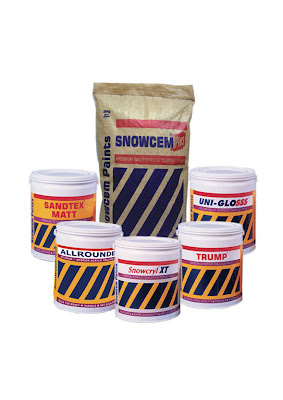
Snowcem Paints, the leading manufacturer of quality exterior paints have launched three new liquid paints in addition to Uni- Glosss, Snowcryl XT, Sandtex Matt and Trump to cater to the varied needs of its customers across the country.
SnowDecor (Protective Texture Wall Finish) Snowcryl (100% Acrylic Weather Proof Exterior Emulsion), and Allrounder (Exterior/Interior Acrylic Emulsion Paint) are the latest additions to the rich product suite that the company has been marketing over the years. Snowcem paints are made using technically advanced systems and the finest of finest raw materials.
The company believes in technology that is Environment Friendly. Sandtex Matt WAS THE FIRST water based exterior paint introduced in 1973. Snowcem paints are lead free, adhering to VOC norms to make not just 'green paints' but paints that are long lasting, protective and economical. THE PAINTS PASS ASTM-D-2369 STANDARD FOR LOW VOLATILE ORGANIC COMPOUND ( VOC)
All Snowcem products meet and exceed the paint standards set THE ENERGY AND RESEARCH INSTITUTE (TERI).
According to Mr Prakash Nagori, advisor to the board of directors, “we are working towards meeting the changing needs of customers and the latest additions to our product category are based on the customer feedback. With a strong brand loyalty, Snowcem has further expanded its marketing and distribution network with a view to streamline the delivery process thus making our paints available quickly and at all times”. Besides 50 point of sales depots, Snowcem has a strong dealership network of 2000 spread across the country.
With real estate and construction industry witnessing rapid growth over the last three years, the demand for exterior paints too has seen a sharp uptrend. With an excellent track record of supplying lasting and environment-friendly paint, Snowcem has been able to service the current boom and come out with products that suit the varied needs of its vast customer base, said Mr Nagori.
The company is among one of the first to introduce ‘Spectro Photo Meter ’ technology at the distribution point under which the customers would be able to quickly match any colours and shades of their choice, Mr Nagori added.
With more and more customers desiring to have their buildings and homes built according to the ‘Vaastu’ principals, Snowcem Paint has just introduced a new range of Vaastu colours for Karnataka and Kerala
The company, that has been a major user of water based paints since 1973, believes in technology that is Environment Friendly. Snowcem paints are lead free, adhering to VOC norms to make not just 'green paints' but paints that are long lasting and economical. All Snowcem products are as per the standards set by Bureau of Indian Standards and by THE ENERGY AND RESEARCH INSTITUTE (TERI).
About Snowcem Paints
Snowcem brand is the first choice for consumers and painters for over 50 years. This internationally renowned brand launched in Mumbai in 1959 in collaboration with George Lillington (UK), making high quality cement paints meeting the specific needs of the vast majority of Indians.
Snowcem is a durable, economic and beautiful protection, Snowcem pioneered and propagated the concept of high performance liquid paints for exteriors in India – SANDTEX MATT launched in the year 1970. Snowcem paints and products have an eco- friendly attitude, Snowcem introduced water based liquid paints as early as 1975.
Internationally recognized brand Snowcem stepped in India during 1959, with a premium cement paint. Between 1963 and 1969, more speciality products, namely IMPERMO,HARDCRETE, CEMPROVER, CEMIX, SNOWFILLA and SNOWSOL were successfully introduced.
In 1970's SANDTEX MATT a prime exterior liquid coating in Europe was launched which met with unprecedented success.
Two new products were launched in 1997 - Premium qualitySnowcryl XT, a pure acrylic base smooth exterior finish and IMPERMO, integral cement water proofing compound, in liquid form.
1999 three new products were introduced: UNI-GLOSSS a multi-surface paint system, TRUMP a smooth exterior emulsion paint and SNOWPLAST an acrylic finishing plaster for interiors.
During last few years many new economy products such as ALLROUNDER, CEMCOLOUR and BIO-WASH have been introduced. The company has recently launched SnowDecor, a complete range of texture finish products in the market.
Snowcem is an internationally recognized manufacturer of paint which was launched in India in 1959 with a premium cement paint. Between 1963 and 1969 speciality products, such as Impermo, Hardcrete, Cemprover, Cemix, Snowfilla and Snowsol were successfully introduced.
In 1970's Sandtex Matt a prime exterior liquid coating in Europe was launched which met with unprecedented success. Two new products were launched in 1997 - Premium quality Snowcryl XT, a pure acrylic base smooth exterior finish and Impermo, integral cement water proofing compound, in liquid form.
1999 three new products were introduced: Uni- Glosss a multi-surface paint system, Trump a smooth exterior emulsion paint and Snowplast an acrylic finishing plaster for interiors.
During last few years many new economy products such as Allrounder, Cemcolour and Biowash have been introduced. The company has recently launched SnowDecor, a complete range of texture finish products in the market.
With the coming of the year 2008, the School of Planning and Architecture New Delhi completes 50 years of its foundation. In this Golden Jubilee Year the students along with leading proponents of various creative field such as fashion, architecture, music, drama, and photography put together “Utopia”. In the 3 day college affair where students participated in various technical events and showcased the potent creative mind. The program included formal quizzes, workshop in photography, membrane structures and pottery. As Snowcem Paints has been in the forefront to support talents in the budding architectural student’s fraternity, it had sponsored the event at Utopia 2008. The three-day cultural extravaganza signed off with the finals of the rock competition and a headline performance by Catch 22.
About the School:
The School of Planning and Architecture had a modest beginning in 1941 as a Department of Architecture of Delhi Polytechnic. It was later affiliated to the University of Delhi and integrated with the School of Town and Country Planning which was established in 1955 by the Government of India to provide facilities for rural, urban and regional planning. On integration, the School was renamed as School of Planning and Architecture in 1959.
Recognizing the specialized nature of the fields in which the School had attained eminence, in 1979, the Government of India, through the then Ministry of Education and Culture, conferred on the School of Planning and Architecture the status of "Deemed to be a University". With this new status, the School has broadened its horizon by introducing new academic and extension programmes and promoting research and consultancy activities.
The School is a specialized University, only one of its kind, which exclusively provides training at various levels, in different aspects of human habitat and environment. The School has taken lead in introducing academic programmes in specialized fields both at Bachelor's and Master's level, some of which are even today not available elsewhere in India. The School, in striving for excellence, has always been in the lead in extending education and research to new frontiers of knowledge. Human habitat and environment being the basic concern of the School, the spectrum of academic programmes is being continuously extended by providing programmes in new fields and emerging areas for which facilities are not available, as yet, anywhere else in the country.
It is that time of the year. The Snowcem Design Award 2008 – IIT Kharagpur organized at the department of Architecture and Regional Planning, IIT, Kharagpur. The event has been sponsored by Snowcem Paints India.
The basic objective was to encourage all levels of IIT’s (Indian Institute of Technology) undergraduate architecture course students working together and learning through ‘Share and Care’ within a given time frame. Sometimes junior students learn quicker with their free interaction with the senior students in the same group. Senior students also prove their leadership in guiding their groups and thus the ‘team spirit’ wins finally.
This was the second reason for organizing this type of competition. Similar time-bound inter class architectural design competitions were also arranged earlier here in this department with our alumni sponsorship. Every time, results came out to be marvelous and purposes rightly addressed. These competitions generate tremendous enthusiasm among architecture students - budding architects for the future.
This year the design theme revolved around creating an Ashram with the site contextual reference from the ghats of Varanasi. Students were asked to create a contemporary religious environment with the vernacular historicity from the past for housing a meditation centre, herbal medicine processing unit, library, display cum religious archival centre as well as dormitories for the residents. Administration, outdoor yoga centre, landscaped gardens including ghats were auxiliary requirements for the same complex.
The total number of students were distributed in six groups. Each group consisted of students from First to Final year B.Arch class. Within a time frame about a week they were asked to submit design ideas with concept philosophy, architectural and structural systems design, inventories of building and finish materials, urban design thoughts for the place with a miniature model for the same.
A five member Jury comprising of Prof. Arif N. Merchant (HOD), Prof. Sanghamitra Basu, Prof. Jaydip Barman, Prof. Joydeep Dutta and Prof. Saikat Paul – members of the faculty evaluated all the design submissions from six groups through a brain storming session. Students have presented their design proposals through well rendered design drawing sheets, miniaturized model along with their literature review and case studies and also concepts in power point slide shows.
Each group with all its members present was asked to describe its design first, followed by subsequent question –answering sessions from the Jury. All the entries were displayed in the department central Atrium and the Jury met again for their final evaluation. The designs were examined in the lights of novelty of the concept, technical inputs from architectural and structural system, circulation, climatic, user-behavioral, energy conscious application, selection of building and finish materials, reference from contextual vernacular styles, verbal explanation points of view.
Though each of the design had its merits or demerits, on comparative scale First, Second and Third positions were decided. The results were declared in the presence of Mr. Madhusudan Roy, Area Manager from Snowcem Paints. The prize in terms of checks, cash awards and certificates were presented among the winners by Mr. M. Roy. He has expressed his happiness for the grand success of this event and also assured for further patronage in similar type of students’ competitive endeavor. The event finished with a vote of thanks from our HOD.
1. All information provided on this blog is to be used for reference and guidelines only. The information is provided by individuals or company, make no representations or warranties about the accuracy, completeness, reliability, suitability or availability with respect to the blog or the information, contents, products, services, or related graphics on the blog for any purpose. 2. Snowcem Paints will not be liable for any loss or damage including without limitation, indirect or consequential loss or damage, or any loss or damage whatsoever arising from loss of data or profits arising out of or in connection with the use of this blog. 3. Snowcem Paints reserves the right to modify /change /or delete anything on this blog at any time, without giving any prior notice or reason whatsoever and whomsoever. 4. Snowcem Paints may provide links to other third-party World Wide Web sites through Banner Advertisement.