Saturday, August 30, 2008

Types of paints to choose from


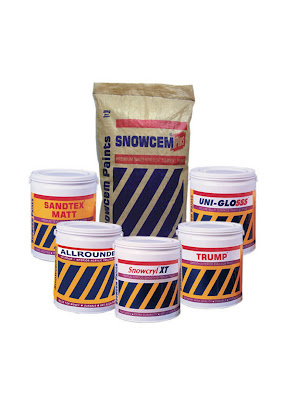
There are different kinds of paints for different jobs. Not all kinds of paint are good on all surfaces. You should make sure that you use the right kind of paint when you are designing your room. If you use the wrong paint on a certain surface, you may have more of a mess than you intended. Check out what kind of paint you should use before you buy it. This will save you money and time in the long run.

There are primers and sealers that you should buy to prepare the surface for the actual paint color. Primers are used to prepare bare or previously painted walls. Sealers are mostly used for bare woods. If you are painting a room that will have kids using it, you should go for a latex paint because it can be cleaned up with soap and water.

There are special paints that are becoming more and more popular with stores. Usually water based paints are different by the additives or the application technique. There is a magnetic paint that contains iron dust mixed with a primer. This type of paint is best for textured finishes for outdoor purposes.

Another type of paint is milk paint. It is a natural and non-toxic paint made from mild protein and earth pigments. It works best for bare wood. Topcoats can be either water or solvent-based coatings. Topcoat finishes create a durable finish on wood floors, furniture, and doors.

There are different finishes for paint also. Flat has no sheen and it is best on walls in rooms that have little use. It will conceal some minor imperfections and is washable but not scrubbable. Eggshell has a smooth finish with a subtle sheen. It is good for walls in family rooms and bedrooms. It is also washable. There is also satin finish, which is a step up from eggshell. It is an all-purpose and popular sheen suitable for almost any room in the house.

Semi gloss is a medium sheen that is good for walls and trim in high abuse areas of the house like the kitchen, bathroom and children’s rooms. It is very durable and washable. Gloss is a paint that is best for doors, trim, and cabinets.

When you are painting, there are a few tips that you should use. When painting walls and trim, use a lower sheen on the walls and higher sheen on the trim. Do not use latex over oil. Latex has a faster drying time so that you can use the room faster. Sometimes when we are painting in our home, we need it to dry fast so that we can put the items back in to that room for use.

When you are painting a room, make sure that you paint the ceiling first. You want to do this so that you do not mark up the walls after they have been painted. This will only cause you more work in the end. When you paint the ceilings, it is best to use a longer pole. This will help you get it done faster and you will not have to worry about getting up and down off of ladders so that you can reach all the areas of the room.

(via Ezilon.com)

Friday, August 29, 2008

How to choose the right interior paint finish


Even after a homeowner has chosen the perfect color for a room, there's another very important decision to make. With 5 or 6 paint finishes to choose from, you should learn the benefits of each and determine the right one for your job. Should you use flat or satin and why? Browse these tips on selecting the perfect paint finishes for your interior home applications.

Matte Finish
Whether called flat finish or wall paint, this type of interior paint has a matte surface. This paint finish is usually used on interior walls. It's expecially good if you have to camouflage small wall bumps, cracks, or other imperfections, as this finish does not reflect light. While some flat paints are advertised as washable today, you may need to touch up scratches or marks by covering with a bit more paint, so be sure you keep some on hand after you've finished painting.

Flat Enamel
Flat enamel is a paint with a durable flat, matte finish. It's a good choice for powder rooms and halls, as it holds up to occasional cleaning.

Eggshell Finish
If you can picture the very low sheen of the shell of an egg, you have an idea of how an eggshell paint finish will appear. With only a slight hint of shine or gloss, it's good for walls and holds up better with cleaning than a flat finish paint.

Satin Finish
Satin finish paint has a smooth, velvety look with a bit more gloss. It is most often used for windows, doors, trim, or ceilings, but can also be used as wall paint. This is particularly suitable for kids' room walls, kitchens, or bathrooms, or in areas which get a lot of traffic. Paint with a satin finish is formulated to hold up to cleaning and light scrubbing.

Semi-Gloss
Semi-gloss paint is most often used on doors, trim, and cabinets in kitchens and bathrooms. It is easily cleaned and lays down a nice, subtle shine, without being too glitzy. Take care with pre-paint preparation work, as poorly prepared surfaces can be a bit distracting when highlighted by a semi-gloss surface.

Glossy
High gloss paints have an almost reflective quality, as their shiny finish mimics the look of enamel or plastic. Though not widely used in home interiors, it is becoming more popular for a dramatic look on cabinets, trim, and furniture in very formal and very contemporary settings. This finish will magnify any surface imperfections, so careful preparation and sanding is essential before painting with high gloss paints.

Read more.

Wednesday, August 27, 2008

National Grand Theater, Beijing


Located near Tiananmen Square, the 490,485-square-foot glass-and-titanium National Grand Theater, scheduled to open in 2008, seems to float above a man-made lake. Intended to stand out amid the Chinese capital's bustling streets and ancient buildings, the structure has garnered criticism among Bejing's citizens for clashing with classic landmarks like the Monument to the People's Heroes (dedicated to revolutionary martyrs), the vast home of the National People's Congress, or Tiananmen Gate itself (the Gate of Heavenly Peace).

French architect Paul Andreu is no stranger to controversy -- or to innovative forms. A generation ago, in 1974, his untraditional design for Terminal 1 of Paris's Charles de Gaulle airport was criticized for its unusual curves, yet Andreu's groundbreaking, futuristic building later was seen to distinguish de Gaulle from more generic European and international air hubs. (The same airport's Terminal 2E, also designed by Andreu, gained attention in 2004 when it collapsed, tragically killing four people.)

Beijing's daring National Grand Theater is as much a spectacle as the productions that will be staged inside in the 2,416-seat opera house, the 2,017-seat concert hall, and the 1,040-seat theater. At night, the semi-transparent skin will give passersby a glimpse at the performance inside one of three auditoriums, a feature that highlights the building's public nature.

Tuesday, August 26, 2008

Rajput architecture


Time: the 14th and 15th centuries.

A political vacuum exists in India. The infighting among the various nobles of the Delhi Sultanate has caused many kingdoms and provincial governors to assert their freedom. From this vacuum come the kingdoms of Vijayanagara, Golconda and Bijapur in the south. In the north, in Rajasthan and Gujarat, the proud fighting clans of the Rajputs too seize this opportunity. This will be the time of chivalry, of great forts under the hot sun, of pomp and splendor, the making of a warrior tradition which will provide eventual stiff resistance to the Mughal onslaught.

However, a break in building tradition – caused by the Delhi Sultanate in the preceding years – means that the science of architecture is no longer the same – the ancient texts which were followed in early temple building have either been lost, or forgotten, or need to be modified in response to changing needs. The craftsmen, too, have now practiced on Islamic buildings, and bring with them the tradition of Islam.

The current of cultural exchange now flows both ways – earlier it was Islam which had to forcedly borrow indigenous craftsmen for its architecture – and now it is these very same guilds who return to the service of Hindu kings. Architecture will now be truly a fusion, and will be one of the first, and among the most prominent, tools of a sub-continental identity, a true Indo-Islamic culture.

Meanwhile the principal players in this drama are of course a little less aware of their eventual place in history, and are more occupied by the more mundane aspects in life. This is the old story of kingdoms waging war against each other and rulers erecting palaces and monuments to their glory, and fortresses to preserve their rule.

The legend of Chittor

The Sisodias of Chittor and Rana Kumbha (1433-68) were among the most active patrons of building. The Jayastambha (Tower of Victory) is an odd structure, combining as it does the urge to commemorate a victory (that over Malwa in 1458), with the principles of temple building. The structure thus becomes quasi-religious, a sort of vertical temple.

Chittorgarh today is a sleepy little town, much like many others in semi-rural India. The youth all want to leave, the cows blink stupidly in the ferocious heat of the mid-day sun, and the halwai is the main cultural centre, where politics is discussed over chai. It doesn’t even have a proper train line, the only connection is by an old metre-gauge to Delhi and Ahmedabad.
Nothing spectacular, one would say. Except for the low plateau in the near horizon, and the massive slumbering walls around its top. This is the fort of Chittor, once home to kings and nobles, of beautiful queens and princesses, of stirring tales of manhood and valor, of noble but futile chivalry, and of eventual, glorious death.

Chittor fort, along with Mandu and Chanderi, represent the start of the tradition of synthesis between native and imported ideas, which was to be carried on with increasing skill in the forts of Gwalior, Orchcha and finally Fatehpur Sikri.

Read more.

Monday, August 25, 2008

What causes global warming?


Scientists have determined that a number of human activities are contributing to global warming by adding excessive amounts of greenhouse gases to the atmosphere. Greenhouse gases such as carbon dioxide accummulate in the atmosphere and trap heat that normally would exit into outer space.

Greenhouse Gases and Global Warming
While many greenhouse gases occur naturally and are needed to create the greenhouse effect that keeps the Earth warm enough to support life, human use of fossil fuels is the main source of excess greenhouse gases. By driving cars, using electricity from coal-fired power plants, or heating our homes with oil or natural gas, we release carbon dioxide and other heat-trapping gases into the atmosphere. Deforestation is another significant source of greenhouse gases, because fewer trees means less carbon dioxide conversion to oxygen.

During the 150 years of the industrial age, the atmospheric concentration of carbon dioxide has increased by 31 percent. Over the same period, the level of atmospheric methane has risen by 151 percent, mostly from agricultural activities such as raising cattle and growing rice.

The Consequences of Global Warming As the concentration of greenhouse gases grows, more heat is trapped in the atmosphere and less escapes back into space. This increase in trapped heat changes the climate and alters weather patterns, which may hasten species extinction, influence the length of seasons, cause coastal flooding, and lead to more frequent and severe storms.

Saturday, August 23, 2008

How to create a color wash effect


Color Washing can be given a variety of textures and patterns depending on the size and type of brushes. Although this technique involves the application of one color over another, the final result would give an impression of a single color.

The thumb rule being that the glaze topcoat should be tinted in a much darker shade than the base coat.

You can create various shapes and patterns - wavy lines, crisscross strokes, and diagonal trellis designs, just by controlling the direction of the brush stroke.